
The Rise of AI Booking Agents: What Google I/O 2026 Means for Hotels

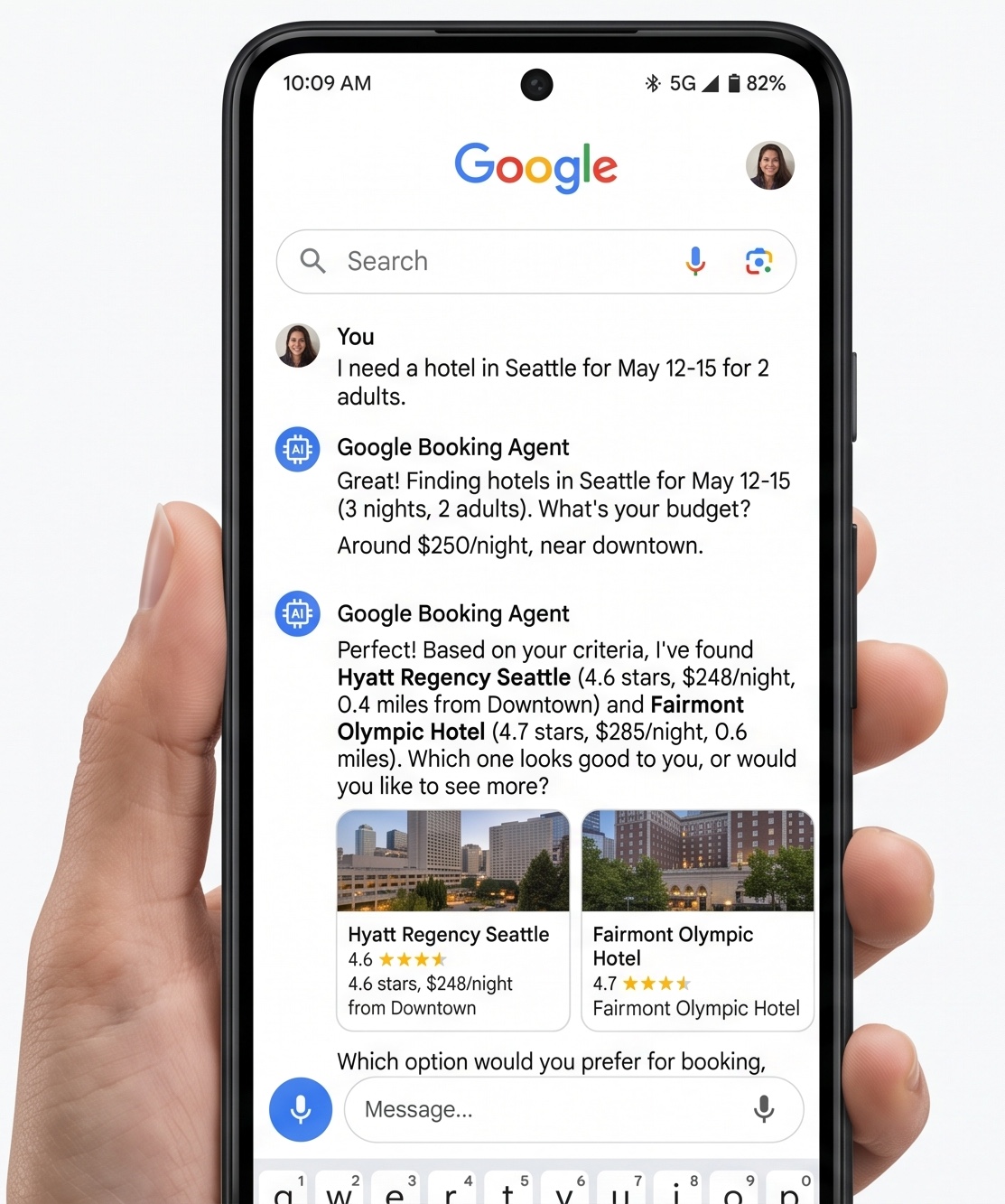
A traveler types trip preferences in plain language into Google, and AI assembles a full itinerary with hotel availability, real-time pricing, and direct booking links without ever leaving the page.
This is the future of hotel booking, and it’s closer than you think.
At Google I/O 2026, Google named hotel booking as the next vertical for its Universal Commerce Protocol. Here’s what it means for the industry.
What Is an AI Hotel Booking Agent?
Traditional chatbots answer questions and hand you off somewhere else, a broader shift we covered in our piece on whether AI is replacing hotel search marketing.
An AI booking agent handles the entire process: searching inventory, comparing rates, and completing the reservation inside a single conversation.
The traveler never visits your website. They describe what they want, the agent checks availability and books it, and the reservation lands in your property management system. If your hotel is not visible to the agent, the booking goes somewhere else.
Google already offers agentic booking for flights, though it’s currently limited to subscribers on the AI Pro Plan and above.
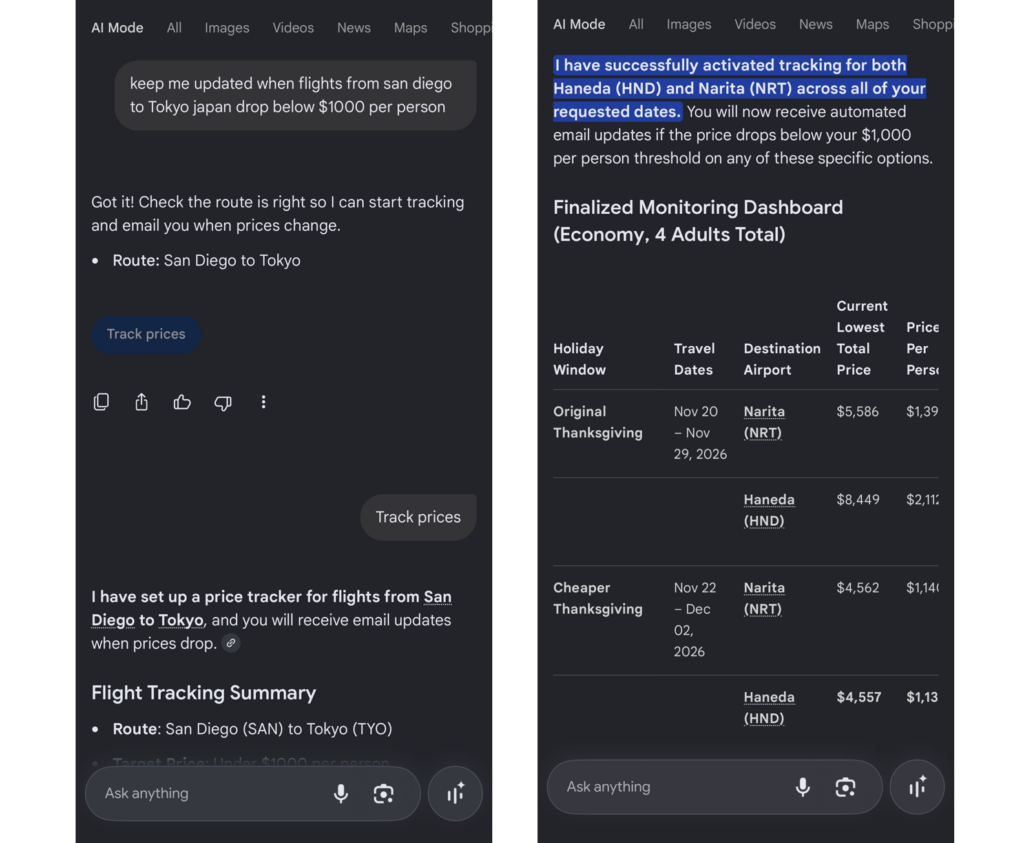
During this year’s I/O Conference, Google’s Vice President and General Manager of Ads and Commerce Vidhya Srinivasan announced that they’re “bringing UCP to even more verticals like hotels and local food delivery providers.”
How Agentic Hotel Booking Works On Google
UCP for Lodging is the underlying plumbing powering Google’s hotel booking ecosystem (see our technical deep-dive on Google UCP for hotels). It converts AI interactions into instant room reservations, with the hotel retaining Merchant of Record status throughout.
Which Hotels and Partners Are Already In
Google has launched a U.S. agentic booking test within AI Mode, with Booking Holdings among the first partners. The confirmed partner list reads like a who’s who of hotel distribution:
| Partner Type | Confirmed Partners | What It Means for Independents |
|---|---|---|
| OTAs | Booking.com, Expedia | Major intermediaries have a front-row seat: they can intercept bookings before guests ever consider going direct |
| Hotel Chains | Marriott International, IHG Hotels and Resorts, Choice Hotels, Wyndham Hotels and Resorts | Large branded portfolios are already connected; independent properties are not on this list |
| Independent Hotels | None confirmed | No direct UCP connection yet; bookings default to whichever partner has clean, agent-readable inventory |
If your hotel is an independent property, none of those names is yours.
And that’s going to be a problem.
The Risk for Hotels That Do Nothing
Travel discovery increasingly happens on AI tools. Among LLMs, ChatGPT is the biggest traffic driver for hotels. But Gemini is gaining ground quickly, surpassing 1 billion users in just one year. Once its agentic features roll out to more users, this could be a game changer for the hospitality industry.
The shift toward agentic AI booking follows a single rule: if an agent can’t parse your inventory, it routes the booking elsewhere.
Large chains and major OTAs have already started adapting to this new era. Booking.com and Expedia dominated OTA recommendations in AI Search for Europe in spring 2026. Their secret? Early positioning and specialized webpages that LLMs can easily pull from.
How Hotels Need to Prepare for Agentic Booking Systems
Here are four critical steps to take now:
Check Vendor Roadmap
You don’t need to build UCP integrations from scratch. Ask your Property Management System (PMS), Channel Manager, or Central Reservation System (CRS) vendor when they plan to support UCP for Lodging.
Eliminate Iframe Bottlenecks
Ensure booking pages use native, indexable elements and structured schema (such as Hotel, LodgingBusiness, and Offer schema) rather than legacy iframe overlays.
Audit AI Visibility
Periodically test conversational queries across major AI interfaces to monitor how your rates, photos, and direct booking options are being surfaced.
Publish AI-Optimized Content
Create well-optimized SEO content that directly answers conversational traveler queries. Clean site architecture paired with clear entity data ensures AI models understand your property’s amenities, location, and unique value propositions.
Final Thoughts on the Rise of AI for Hotel Bookings
Being invisible to an AI booking agent is a distribution problem, and it has a technical fix. O’Rourke Hospitality Marketing has worked exclusively with hotels since 2004, which gives us the industry insights needed to put your hotel on the map for AI booking agents. We look at how your site is built, where your rates actually live in the code, and whether your content gives an AI agent enough signal to work with. Book a consultation with our team today.